Automotive Manufacturing Facility Roofing in Detroit, MI
Plant-scale reroofs phased around multi-shift production, paint-shop hot-work limits, and the press vibration that fatigues ordinary seams.
On a plant roof, the production schedule writes the spec
Roofing an automotive plant is a logistics problem with a membrane attached. Assembly plants, stamping facilities, and powertrain operations run continuous shifts where a production interruption carries a defined cost per hour that the plant's facility engineers hand you before the contract is signed. That number governs every decision we make about phasing, mobilization, and sequencing. We treat the roof as a process the plant cannot pause, which is why a job like this is planned around the line rather than around the weather window.
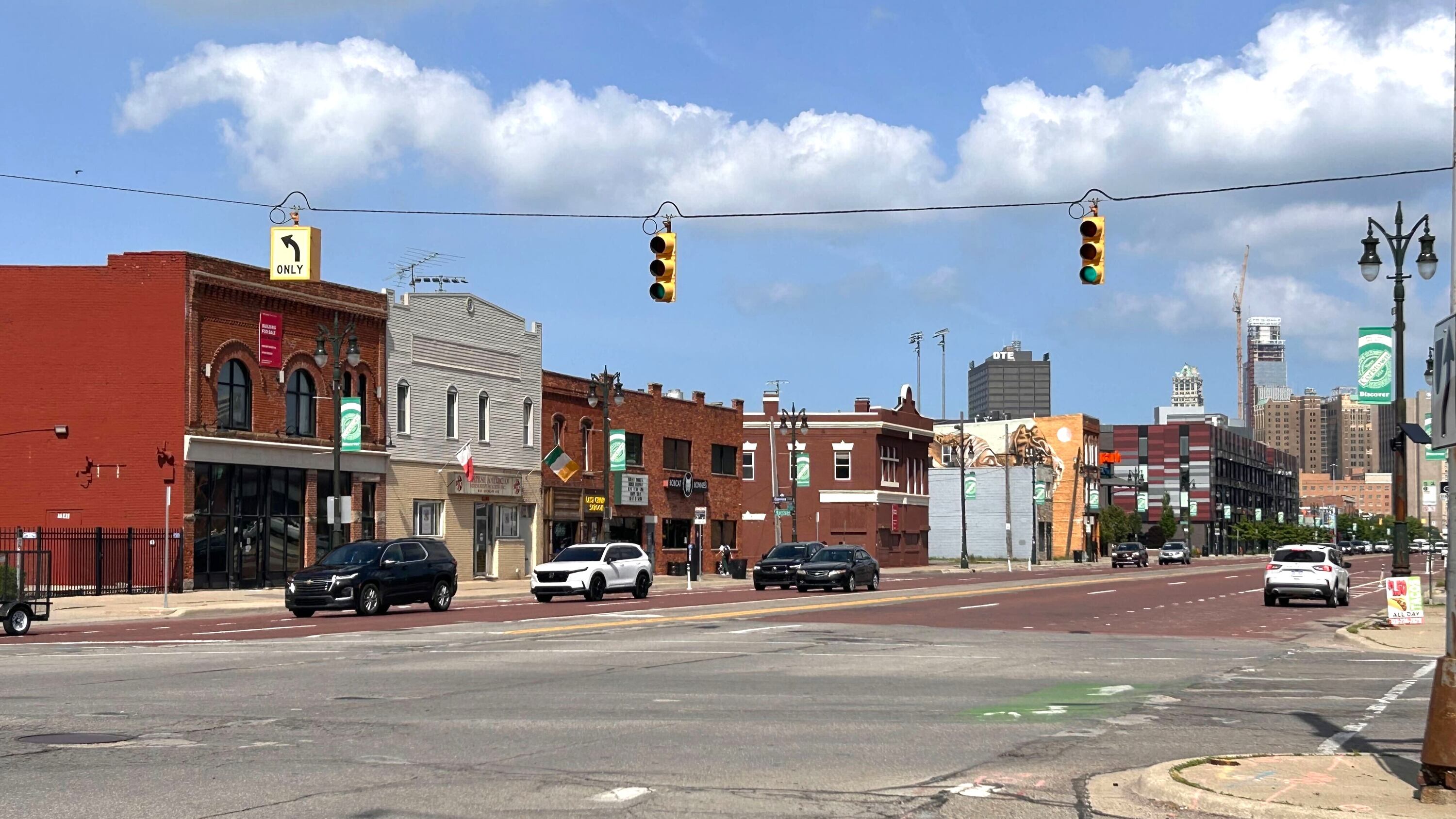
Detroit is the place this work was invented and it is still where these buildings cluster. The Factory ZERO assembly plant on the Detroit-Hamtramck line, the historic engine and stamping plants along the we-94 Industrial Corridor, and the Tier 1 supplier base ringing the metro all carry roof decks measured in the hundreds of thousands of square feet, frequently on mid-century steel that has been modified for decades. Add Michigan snow load, freeze-thaw cycling, and lake-driven wind uplift, and a multi-million-square-foot reroof becomes an exercise in staging tear-off so the building is dry-in before every shift change.
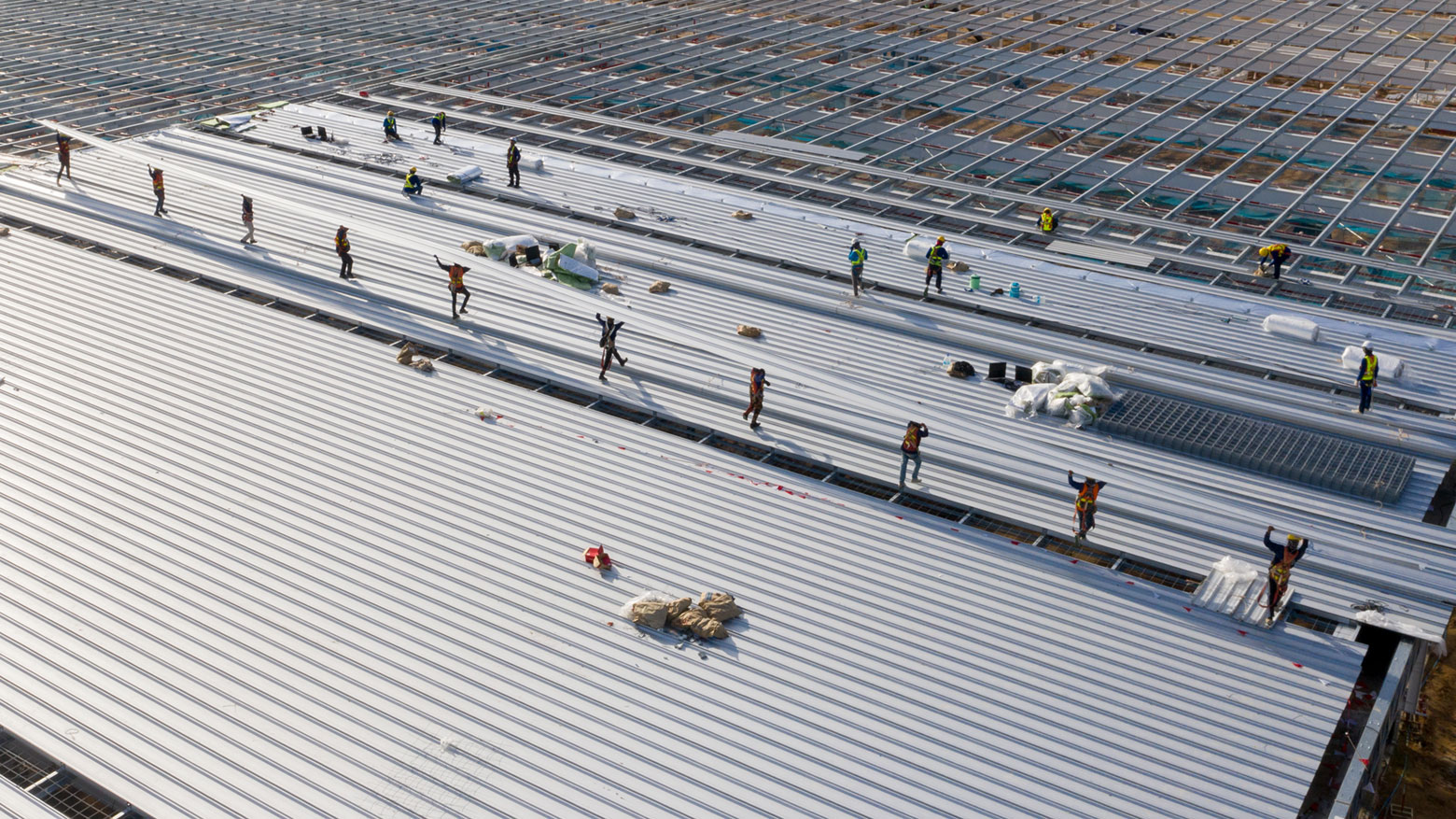
Assembly plants carry some of the largest single-envelope roof decks in commercial construction, and a roof of 500,000 to 3,000,000 square feet cannot be approached as one project. We section it into manageable zones, sequence material delivery and tear-off to stay inside crane capacity and on-site storage limits, and keep adjacent zones in production while the active phase proceeds. The difference between a clean plant reroof and a production-disrupting failure is the logistics plan, and that is where we put the work up front.
Paint shops change the rules above them
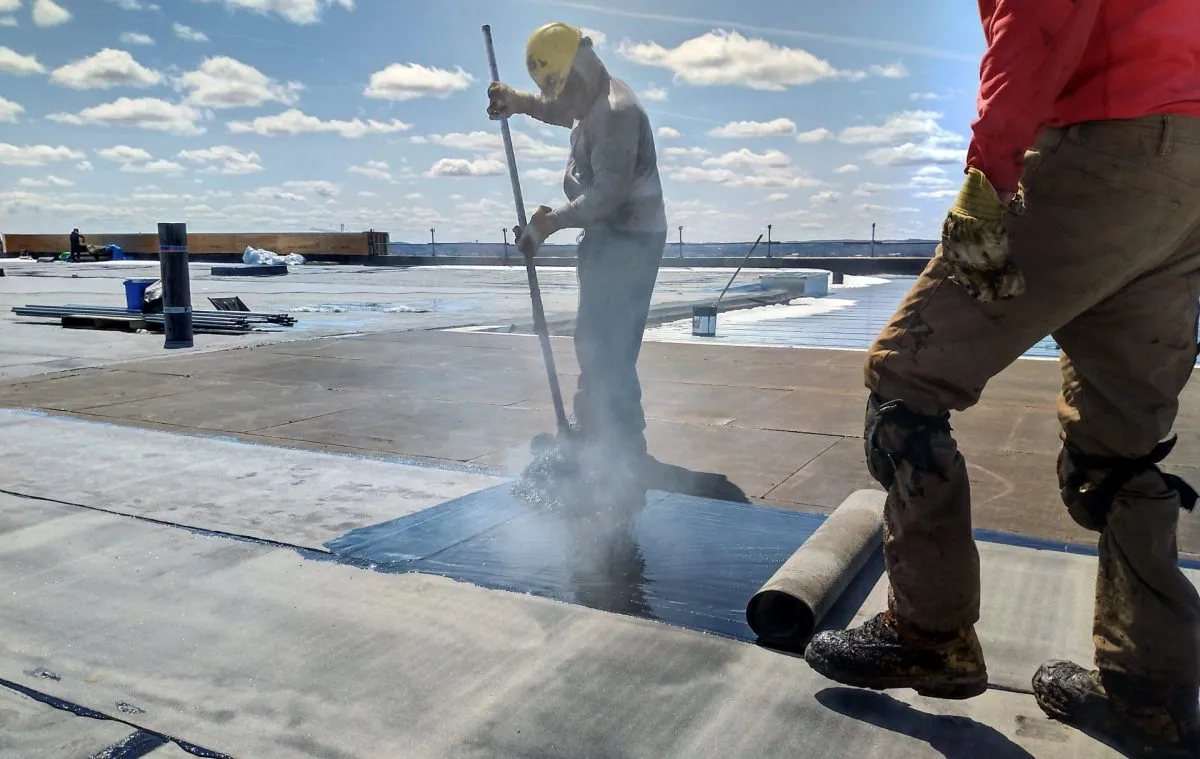
Paint operations generate solvent vapor and carry fire-suppression requirements that reshape the roofing approach. Hot-work permits, adhesive selection, and torch restrictions all tighten over and around paint-adjacent zones. We build a hot-work plan with the plant's environmental health and safety team before anyone touches those areas, and we specify cold adhesive or mechanical attachment instead of torch application wherever paint exclusions apply. Solvent-based adhesives are off the table above active paint.
Press and casting vibration fatigue ordinary seams
Stamping, casting, and powertrain buildings transmit vibration up to roof level from heavy presses and machining equipment. Standard single-ply seam design handles most commercial buildings fine, but the frequencies a large stamping operation produces can fatigue a poorly welded or adhesive-bonded seam over time. We account for vibration exposure in both the membrane spec and the welding procedure for press-adjacent zones.
Large-span systems built for Michigan
Ventilation, make-up air, and the penetration field
A plant roof carries an enormous mechanical load that a warehouse never sees: ridge ventilators and gravity exhaust pulling welding smoke and process heat out of the building, banks of make-up air units feeding it back in, dust-collection ductwork, compressed-air and process piping, and the conduit runs that tie a modern automated line together. Each one is a penetration that has to be flashed for the airflow and heat it actually moves, and on a deck this size the penetration field is most of the labor. We inventory and map every curb, vent, and pipe before tear-off, re-flash them to match the equipment rather than to a stock detail, and design walkway protection along the heavy maintenance routes so the membrane survives the foot traffic a 24-hour plant puts on it.
Re-roof versus recover, and tear-off logistics at scale
On a deck measured in acres, the recover-versus-tear-off decision has real money in it. We core the existing assembly to confirm insulation layers, trapped moisture, and total weight in place, then weigh a recover against a full tear-off based on what the structure can carry and what the warranty requires. When tear-off is the answer, the logistics become the project: staging dumpsters and material at multiple drop points so crews are not hauling debris across a live roof, sequencing crane picks around production traffic below, and sizing each day's tear-off to exactly what can be made watertight before the shift changes. Old built-up and gravel systems common on Detroit's mid-century plants add disposal weight and surprises, so we plan removal and dry-in zone by zone rather than opening more roof than we can close.
Before mobilization we document the shift schedule with the plant's facility engineering team, identify which zones sit over active lines, and build a zone-by-zone phasing plan that stays clear of production. Dry-in is confirmed before each shift change, and we hold direct communication with the maintenance foreman throughout. Tier 1 and Tier 2 supplier plants get the same treatment, often with the added pressure of just-in-time delivery that tolerates zero interruption.
Questions Detroit plant facility teams ask
How do you minimize production disruption?
Production continuity governs every scope decision. We document shift schedules, map which zones sit over active lines, phase the work to stay clear of them, and confirm dry-in before each shift change.
How do you handle hot-work limits over paint shops?
We build the hot-work permit plan with your EHS team in pre-construction and specify cold adhesive or mechanical attachment over paint-adjacent zones where torch exclusions apply.
What systems do you use on large-span decks?
Usually 60-mil or 80-mil TPO mechanically attached, with fully adhered systems in paint zones and tapered insulation where drainage needs correcting, after confirming deck capacity.
Do you work on Tier 1 and Tier 2 suppliers?
Yes. Supplier plants get the same production-first coordination as OEM facilities, with extra attention to just-in-time delivery schedules.
What closeout documentation do you provide?
Safety qualification records, a site-specific safety plan, warranty registration, a roof-zone diagram with penetration inventory, daily work reports, permit records, and a photographed condition survey, formatted to the plant's facility-management standards.
Roof-area photos, access notes, leak points, rooftop equipment conditions, and visible membrane details.
Drainage, seams, curbs, penetrations, edge metal, winter exposure, repair limits, and replacement triggers.
A practical split between emergency work, repair, maintenance, coating, recover, and replacement planning.