Food Processing Facility Roofing in Detroit, MI
Roofing for washdown humidity, heavy refrigeration loads, and production floors where a leak is a food-safety event, not a maintenance ticket.
The moisture in a food plant comes from below as often as above
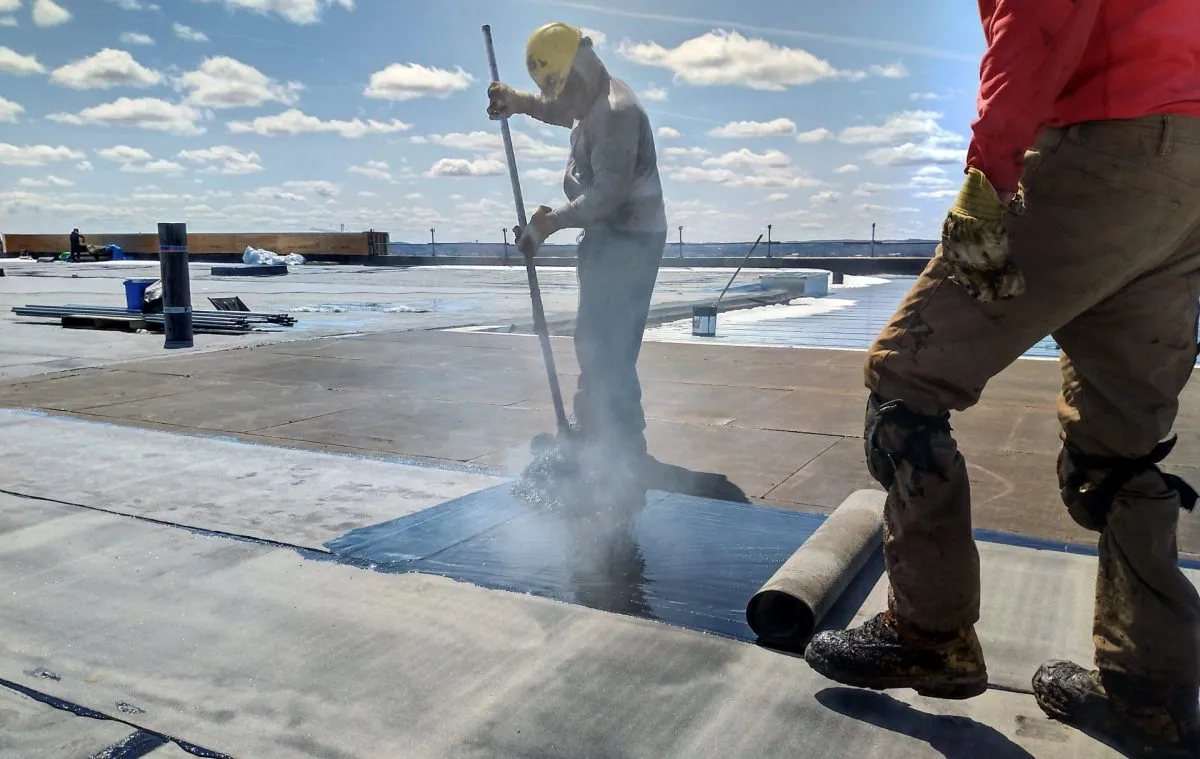
A food processing roof has to fight water it never sees from the sky. Daily sanitation washdowns flood the production floor with hot water and steam, and that moisture drives upward into the deck cavity, where it meets the cold underside of insulation chilled by the refrigerated rooms below. Get the vapor control wrong and you grow condensation inside the assembly that rots the deck and ruins the insulation without ever showing a stain on the ceiling. We design these roofs around the interior moisture and the cold-chain first, because that is where food plant roofs actually fail.
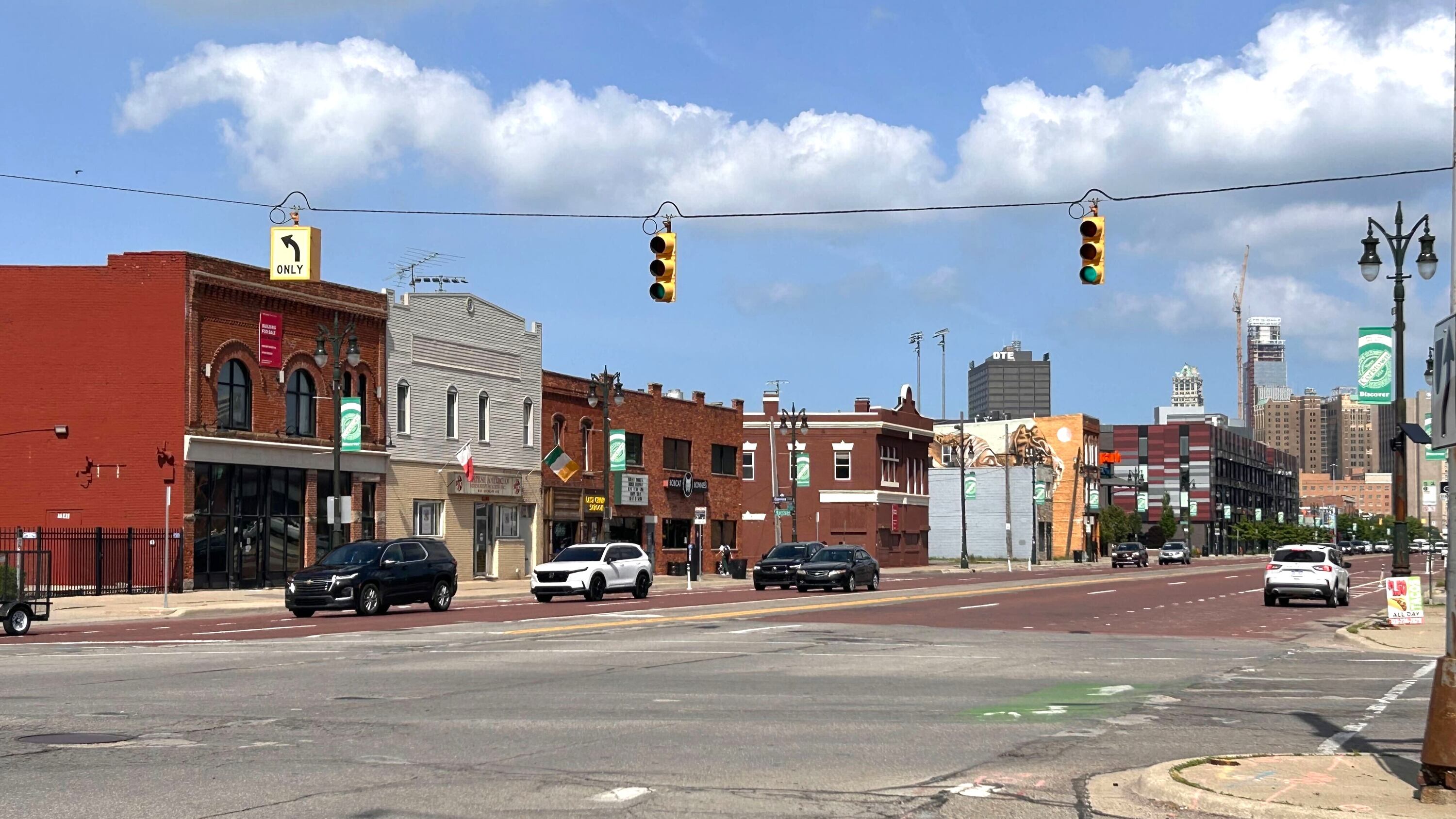
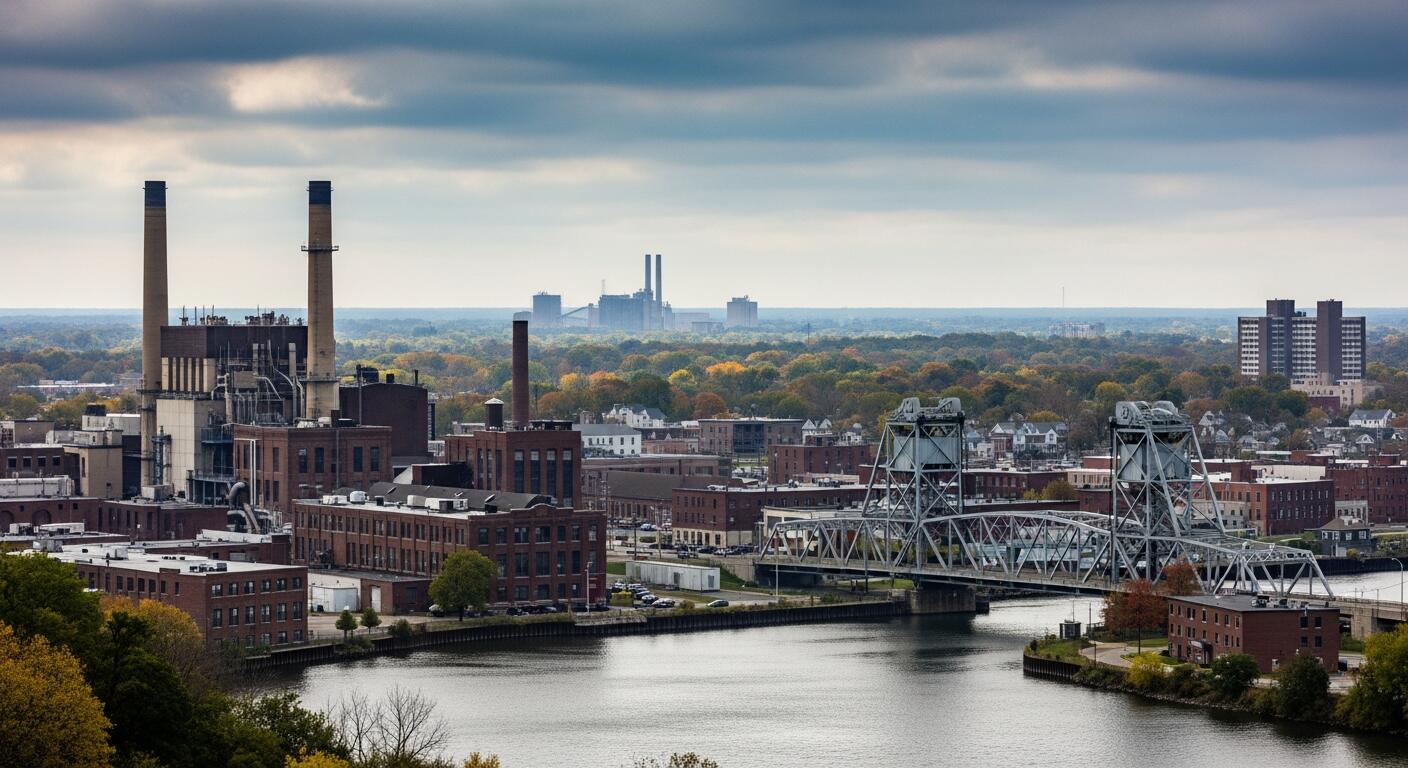
Detroit gives us a deep base of these buildings. Eastern Market remains the region's food-distribution and production hub, with packers, processors, and cold houses clustered around Russell Street and Gratiot, and the meatpacking and food-production trade still anchors that district. Beyond it, the we-94 and we-75 industrial corridors and the older plants around Delray and southwest Detroit carry bakeries, beverage operations, and protein processors, many in mid-century buildings whose original roof assemblies were never engineered for today's refrigeration loads. Michigan's freeze-thaw winters then reverse the vapor drive seasonally, which is exactly why a generic tapered package fails here and a climate-matched assembly does not.
Material acceptability comes before anything else
USDA and FDA-regulated production limits what can go on the roof above a food-contact zone, and not every membrane, adhesive, primer, or sealant qualifies. White TPO and PVC single-ply are generally acceptable above enclosed processing areas, but the specific formulation and installation method have to be confirmed against the plant's food-safety plan, and many common roofing adhesives carry solvents that are not acceptable in a production environment. We identify the regulatory framework and clear every material with the plant's quality team before we spec it.
The sanitation window is the schedule
Detroit food plants commonly run two or three shifts with one weekly sanitation window as the only stretch the floor is down. Any work that opens the envelope above an active production area is confined to that window, with the production team and the quality manager confirming the floor is clean and protected before we start. We phase the project around the plant's clock, not the other way around, and we plan refrigerated-area work in coordination with the refrigeration crew so we never break the cold chain.
Refrigerated spaces change the whole assembly
Roof areas over freezer rooms, chill rooms, and blast-freeze zones have to hold thermal continuity to keep condensation out of the assembly. We design tapered insulation over refrigerated areas around the actual operating temperatures and the local vapor-drive direction, and we treat drainage as a thermal issue as much as a water issue:
Sanitary detailing where the roof meets the building
In a wet plant the failures cluster at the transitions, so that is where we spend the detailing. Wall-to-roof junctions, drain bowls, and pipe penetrations get details that shed washdown moisture and resist the daily pressure-spray, and we avoid horizontal ledges in the assembly where condensate or wash residue could pool and harbor growth. Rooftop drains over wet areas are oversized and kept clear so the floor sheds water fast rather than holding a film, and overflow scuppers are detailed to carry a clogged-drain event without backing water against a curb. The goal is a roof envelope that supports the plant's sanitation program instead of fighting it.
Rooftop loads from a processing operation
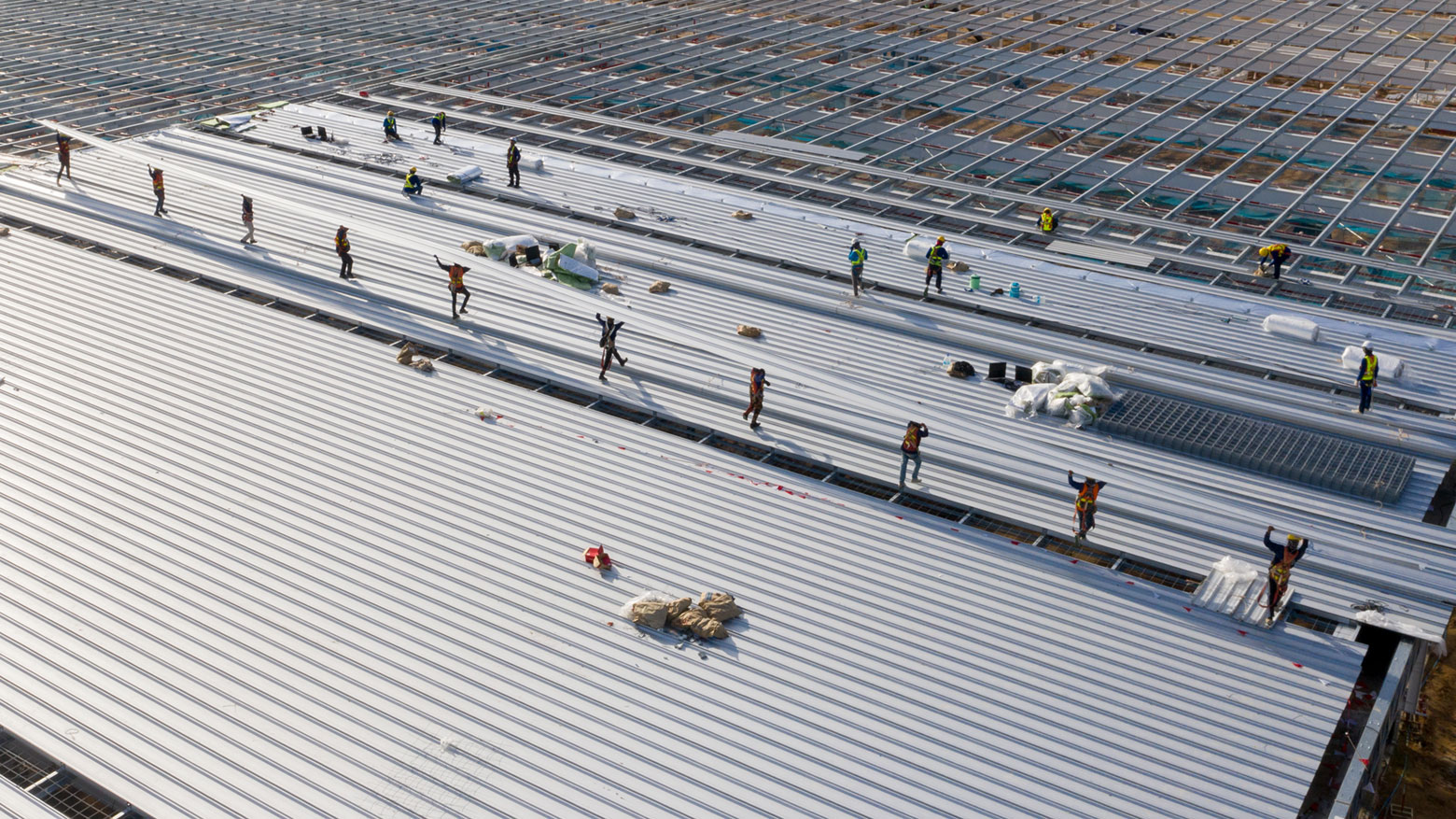
Food plants pile weight onto the roof: refrigeration condensers, large makeup-air and exhaust units pulling cooking and washdown vapor, process piping, and sometimes elevated equipment platforms. We inventory that load and confirm the deck and structure can carry it before adding insulation thickness or new units, and we flash the heavy makeup-air and exhaust curbs for the continuous humid airflow they actually move rather than to a generic curb detail. Where a plant is planning a line expansion, we coordinate the roof scope with the new equipment layout so penetrations are cut and flashed once, correctly, instead of patched in later.
Detroit weather stacked on a humid building
Snow load and ice damming around drains, freeze-thaw cycling on every seam, and the wind-driven rain that comes off the lakes all hit a building that is already saturated with interior humidity. We detail edge metal, drains, and flashings for those conditions so the roof survives the season it actually operates in.
When a leak hits an active line
A leak above a running line in a Detroit plant means an immediate call to quality and facilities for a product-hold evaluation and documentation. Our emergency response for food plants includes 24-hour contact, priority mobilization for temporary dry-in, and the documentation the plant needs for its incident reporting. Roof condition is also a standard item in USDA and FDA inspections, so we supply condition records and repair history that quality managers can produce on demand.
Questions Detroit food processors ask
Are all roofing materials acceptable over food production?
No. Membranes, adhesives, primers, and sealants must be confirmed acceptable for the production environment before installation, and that is not universal across products. We clear every material with your quality team first.
How do you schedule around production?
We work to your weekly sanitation window and any planned shutdowns for work above the floor, and we coordinate refrigerated-area work with the refrigeration team to protect the cold chain.
How do you handle drainage over freezers?
Tapered insulation routes water to scuppers or drains at each bay's low point so ponding does not add refrigeration load or corrode the deck, designed to the refrigeration system's thermal specs.
What happens if the roof leaks during production?
We respond on a 24-hour basis with priority dry-in and provide documentation support for your product-hold and incident reporting.
Can your records support a USDA or FDA inspection?
Yes. We supply condition documentation and repair history that demonstrate proactive roof maintenance for facility inspections.
Roof-area photos, access notes, leak points, rooftop equipment conditions, and visible membrane details.
Drainage, seams, curbs, penetrations, edge metal, winter exposure, repair limits, and replacement triggers.
A practical split between emergency work, repair, maintenance, coating, recover, and replacement planning.