Mixed-Use Development Roofing in Detroit, MI
Mixed-Use Development Roofing in Detroit, MI
A mixed-use building is several buildings stacked on top of each other, and its roof is never a single thing. Retail and a parking deck at grade, apartments or offices above, a landscaped plaza or amenity terrace somewhere in the middle, and a main membrane crowning the tower — each one is a separate waterproofing problem with its own loads, its own occupants, and its own warranty. Detroit's downtown core has filled with exactly these projects over the past decade, and the difference between a development that stays dry and one that fights leaks for years usually comes down to whether the contractor understood the building vertically instead of treating the roof as one flat plane.
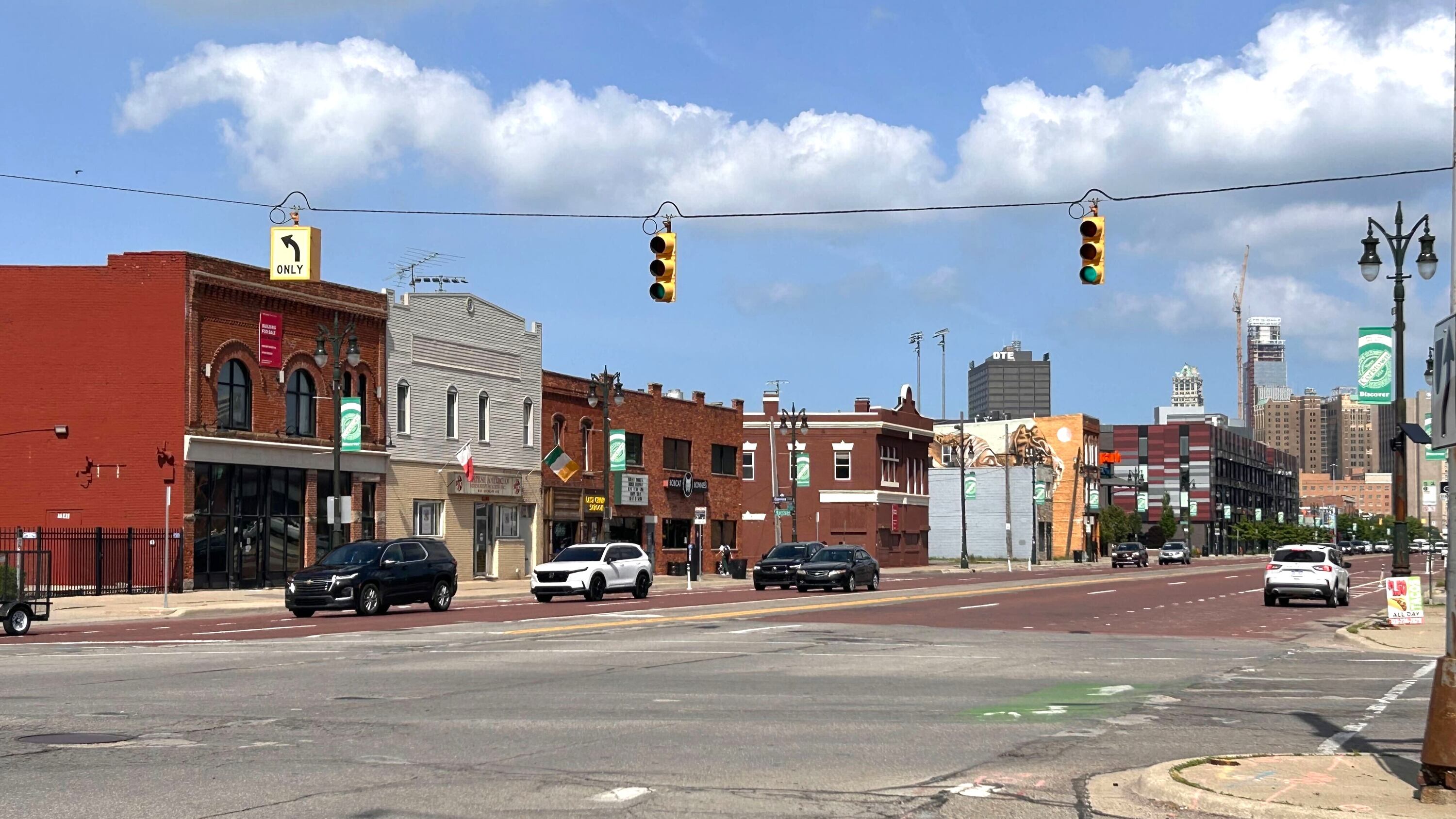
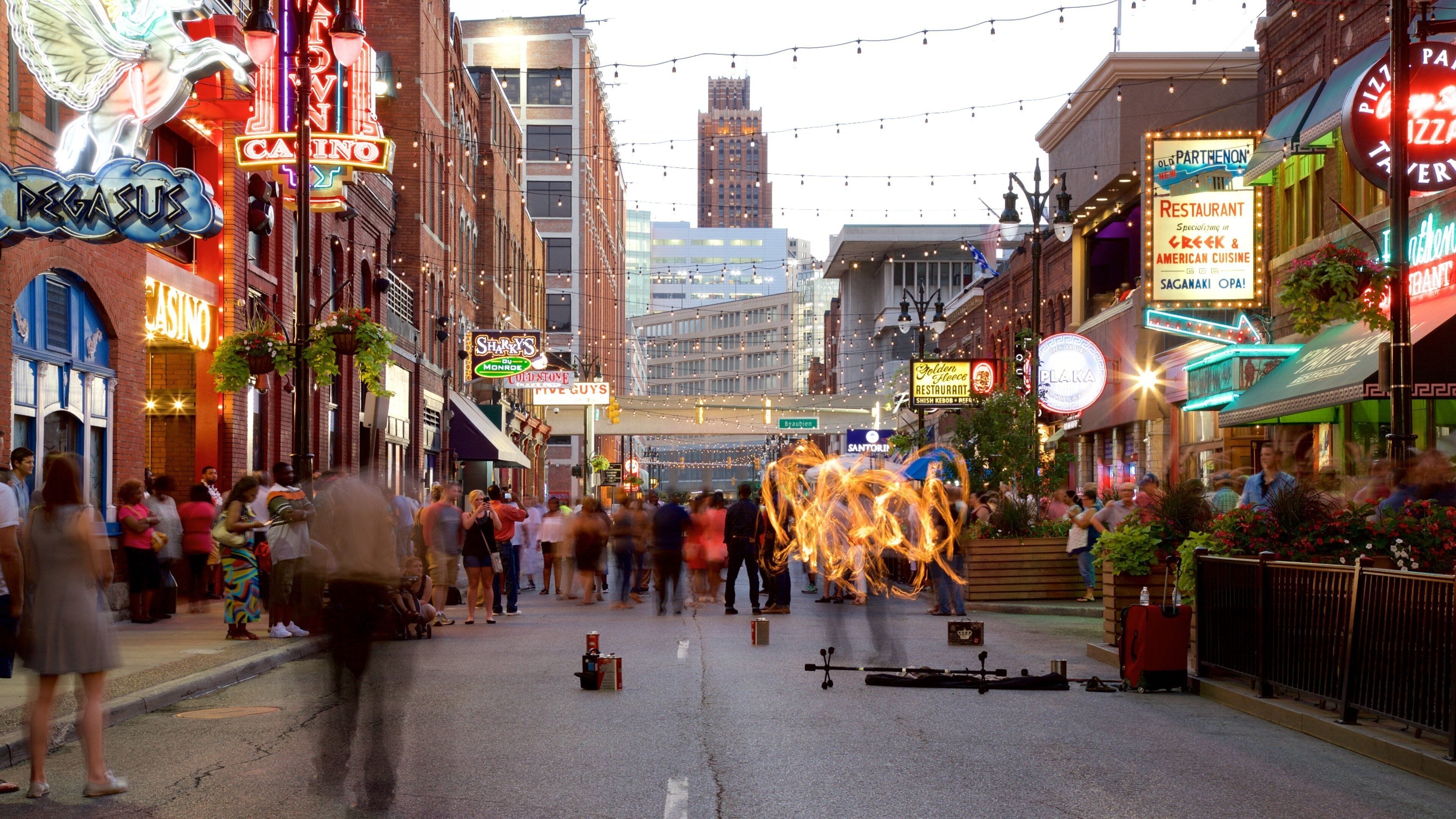
The neighborhoods driving this work are easy to name. The Woodward corridor through downtown and into Midtown has seen tower after tower with ground-floor retail and residential above. Capitol Park and the lower Woodward blocks turned a cluster of historic office buildings into mixed-use adaptive reuse. Brush Park, just north of downtown, went from vacant lots to a dense district of new residential-over-retail construction. Corktown, defined by the Michigan Central redevelopment, has added mixed-use blocks around the old station. And the QLINE streetcar running up Woodward has pulled transit-oriented development along its whole length. Every one of these projects carries the layered roof we specialize in.
The Podium Deck Is Not a Roof — It Is a Plaza You Can Stand On
The single most expensive mistake on a mixed-use building is treating the podium deck like ordinary low-slope roofing. The podium is the slab between the parking or retail at grade and the residential above, and where it extends out it becomes a courtyard, a pool deck, or a planted terrace. That assembly carries pedestrian and sometimes vehicle traffic, holds standing soil and hydrostatic pressure in its planters, and deflects under structural load. It needs a traffic-bearing waterproofing membrane, a drainage composite, a root barrier under any landscaping, and protection course before the finish goes down — none of which is a standard roofing membrane. We have watched generic single-ply specified on plaza decks fail inside five years because it was never built for that duty. We coordinate the podium assembly with the structural engineer and the deck-finish trades from the start, because once the pavers and planters are in, a failure means demolishing everything above the leak to reach it.
Tower Roofs and Amenity Terraces
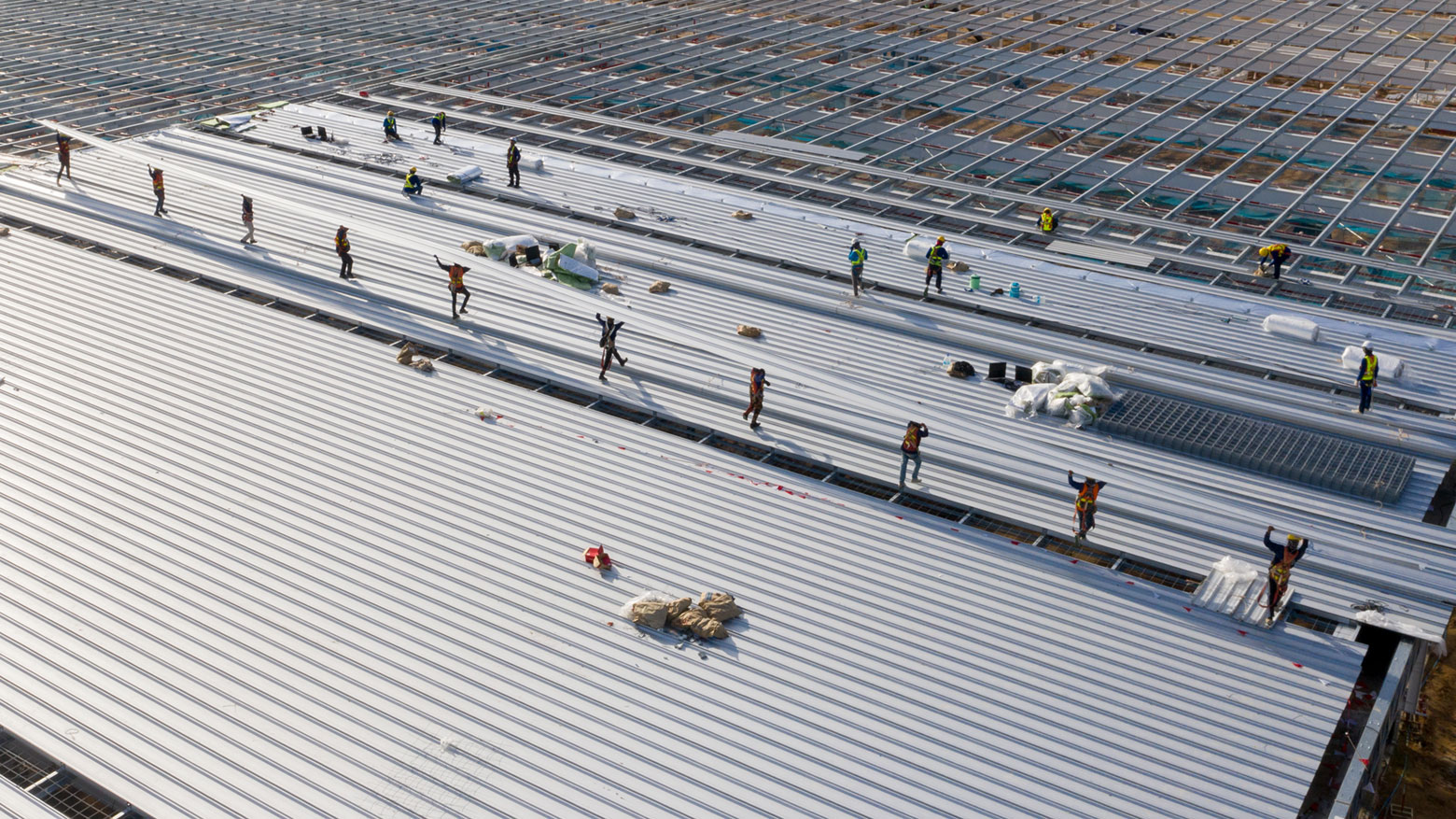
Up top, the residential or office roof brings its own list: parapet drainage, the mechanical penthouse and elevator overrun flash-throughs, and increasingly a rooftop amenity deck — a lounge, a dog run, a garden — that residents actually walk on. An amenity deck is another traffic-bearing assembly hiding under a finish surface, not a membrane with pavers tossed on top. We build it as a system, with the waterproofing, the pedestal-set surface, and the drainage all coordinated, and we register the warranty for the whole assembly rather than just the membrane layer.
Working Above Occupied Retail and Residences
By the time the roof gets attention on a Detroit mixed-use building, people usually live and shop inside it. That changes everything about how we sequence. Downtown noise rules constrain start times. Ground-floor retail cannot lose its entrance to a material hoist during business hours. Residents on the top floors are directly under the work. We build a phasing and containment plan before mobilizing — dust and debris control, hoist and crane staging that keeps storefronts open, and a daily dry-in confirmed in writing before each shift ends. We do not leave a deck open overnight above somebody's apartment.
Mixed-use roofing rarely happens in isolation. On new construction and major renovation alike we are working alongside the general contractor, the mechanical and electrical subs whose equipment penetrates the deck, the structural engineer who owns the load path, and the building-envelope consultant who reviews every detail. We move inside that framework: shop drawings and submittals routed for architect review, manufacturer technical sign-off on the specified assembly, a waterproofing mock-up tested before full installation, and inspection reports at each milestone. Lenders and developers expect that paper trail, and we produce it as part of the job rather than scrambling for it at closeout.
Why can't we use the same membrane on the plaza deck as on the tower roof?
The tower roof drains and only sees maintenance foot traffic. The plaza deck carries people, holds soil and water in planters, and flexes under load. A standard roofing membrane on a plaza is the wrong spec and typically fails within a few years. The deck needs a traffic-bearing waterproofing assembly built for that duty.
Can you work while the retail and apartments stay open?
Yes — that is most of this work in Detroit. We phase the project, contain dust and debris, stage hoists so storefronts stay open, and confirm watertight dry-in in writing before every shift ends. We never leave a deck open above an occupied unit.
Who do you coordinate with on a new mixed-use build?
The general contractor, the mechanical and electrical subs, the structural engineer of record, and the envelope consultant. We run our submittals, mock-ups, and milestone inspections inside that team's process.
Do you handle rooftop amenity decks?
Yes. We build the amenity deck as a complete traffic-bearing system — waterproofing, pedestal-set surface, and drainage coordinated together — and warranty the assembly, not just the membrane.
What documentation do lenders and developers get?
Architect-reviewed submittals, manufacturer technical approval, mock-up test results, milestone QC and manufacturer-rep inspection reports, and NDL warranty registration at closeout.
Roof-area photos, access notes, leak points, rooftop equipment conditions, and visible membrane details.
Drainage, seams, curbs, penetrations, edge metal, winter exposure, repair limits, and replacement triggers.
A practical split between emergency work, repair, maintenance, coating, recover, and replacement planning.