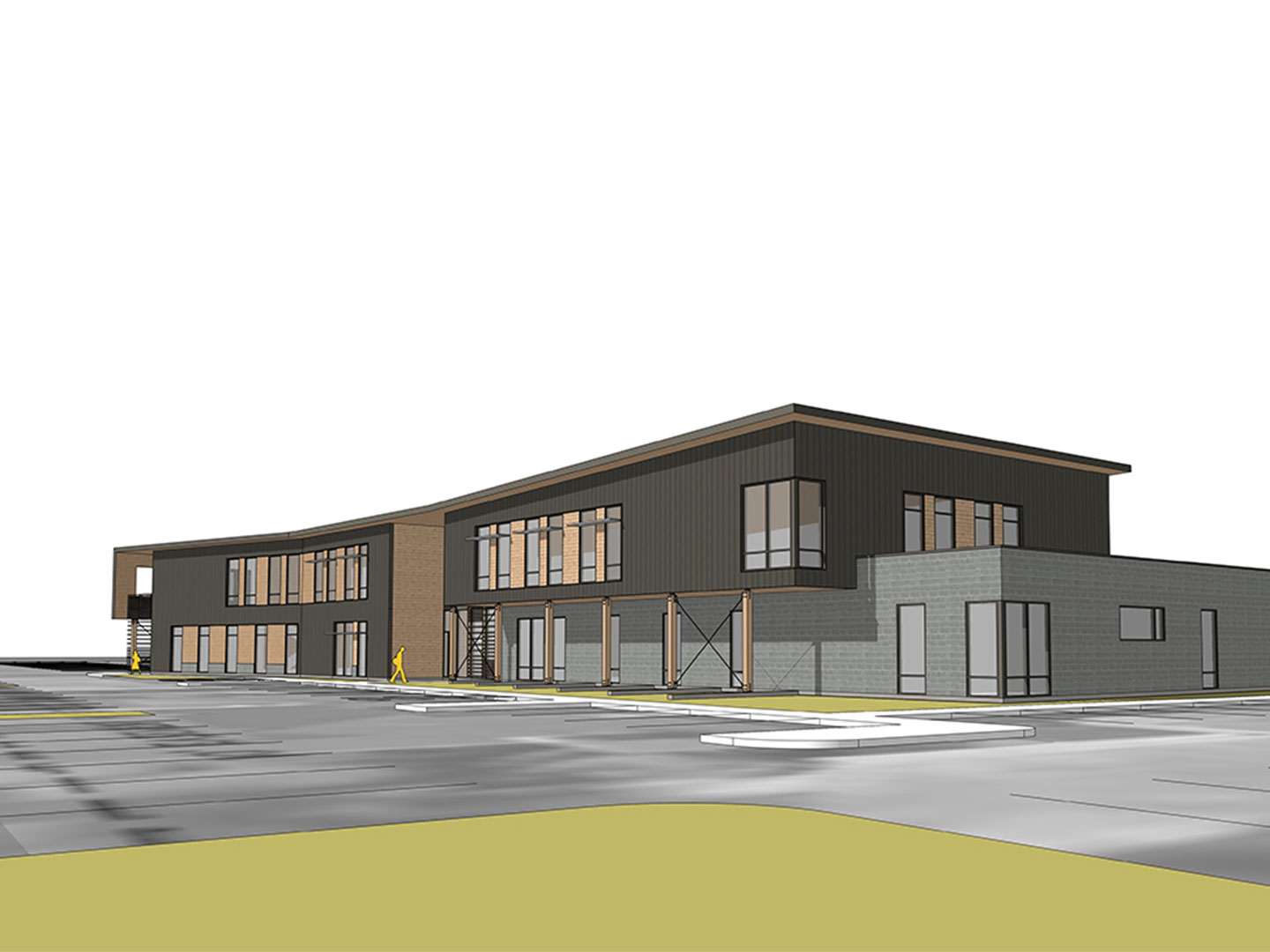
Healthcare Facility Roofing in Detroit, MI
Commercial roofing for hospitals, medical offices, clinics, and healthcare facilities.
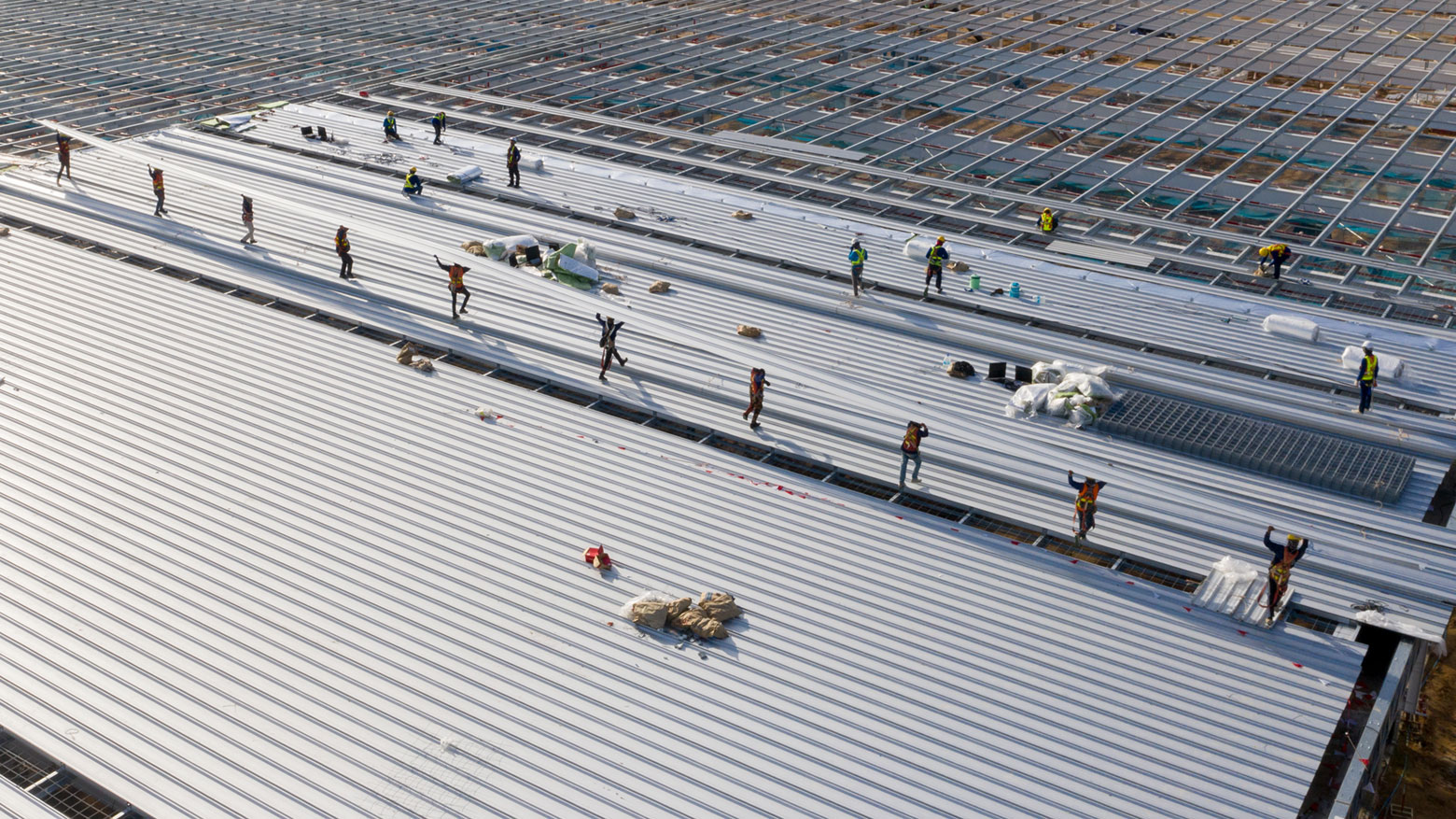
Detroit's healthcare landscape is defined by some of the largest and most research-intensive medical institutions in the country. Henry Ford Health's sprawling New Center campus, Detroit Medical Center's network of specialty hospitals along the Warren Avenue corridor, and Beaumont Health's regional presence stretching from Dearborn to Royal Oak collectively represent billions of square feet of occupied medical building space. Each of these campuses has been expanding or modernizing, and every new building, every roof replacement, and every rooftop equipment upgrade involves roofing decisions that carry patient safety implications that extend far beyond the scope of conventional commercial construction.
Michigan's climate is particularly unforgiving for roofing systems on medical buildings. Detroit winters bring lake-effect snow from Lake Erie and Lake St. Clair that can deliver multiple feet of accumulation in short periods, followed by rapid warming events that send meltwater across frozen membrane surfaces and into every imperfection in counterflashing or drain boot details. The ice dam formations common along the eaves and parapets of older hospital structures in Detroit's medical district are not merely aesthetic problems—they represent active water infiltration threats to the occupied spaces below. Any roofing contractor working on Henry Ford or DMC facilities needs deep familiarity with Michigan's freeze-thaw patterns and the specific construction details that prevent ice damming on low-slope commercial roofs.
The density of rooftop penetrations on a major Detroit hospital is staggering compared to any other commercial building type. Detroit Medical Center's Harper University Hospital, for example, routes medical gas delivery systems, vacuum lines, emergency generator exhaust, multiple generations of HVAC units, elevator machine room vents, and food service exhaust through the roof plane. Each penetration was installed at a different point in the building's history, often by different contractors using different flashing standards. A comprehensive re-roofing project on a campus like this requires a penetration-by-penetration audit before any membrane specification is written, because the interactions between new membrane systems and existing penetration flashing—some of them decades old—determine whether the finished project holds up or fails within a few years.
Infection control on roofing projects at Detroit's major medical facilities is governed by a layered set of requirements: the Joint Commission's Environment of Care standards, the Michigan Department of Health and Human Services facility construction guidelines, and each hospital network's internal infection prevention protocols. At Henry Ford Health and Beaumont locations, contractors receive ICRA category assignments for their specific work zones, which dictate the level of containment, the type of dust suppression required, and the air monitoring protocols that must remain in place throughout construction. Roofing work directly above critical care units, operating rooms, and oncology floors typically receives the highest ICRA category rating, requiring full plastic barrier containment and negative air pressure regardless of whether the work is expected to generate significant dust.
Detroit's medical corridor has also seen significant growth in specialized facilities that present unique roofing challenges. The Karmanos Cancer Institute's ongoing expansion, the Barbara Ann Karmanos Cancer Center's rooftop mechanical upgrades, and multiple new ambulatory surgery centers operated by Michigan Medicine affiliates in suburban Oakland and Macomb counties all require roofing contractors who understand the intersection of precision construction and continuous occupancy. A freestanding outpatient surgical center in Troy or Southfield cannot suspend operations for a week while a roof replacement proceeds—the financial and operational implications are too significant. Phased roofing plans that isolate work sections to overnight windows while maintaining watertight coverage over occupied areas are the standard approach for these facilities.
The aging hospital building stock in Detroit proper—many structures dating to the 1950s through 1970s—presents specific hazardous material challenges that contractors must navigate before any demo work begins. Roofing systems from this era commonly contain coal tar pitch, asbestos-containing insulation boards, and asbestos felt in built-up roof assemblies. Michigan's Department of Environment, Great Lakes, and Energy enforces asbestos regulations with a level of rigor that requires licensed abatement contractors to remove and dispose of these materials before re-roofing can proceed. Facilities managers at Detroit Medical Center and other older campuses routinely require roofing contractors to submit a hazardous material management plan as part of the pre-qualification process for any re-roofing project.
Preventive maintenance programs at Detroit healthcare facilities must account for both the severity of Michigan winters and the vulnerability that comes with high-penetration roofs. Biannual inspections—one in late October before the first heavy snow and one in April after the freeze-thaw season concludes—should include drain inspections, penetration sealant evaluation, and infrared thermography to identify wet insulation before it produces visible ceiling staining or mold growth in patient care areas. Emergency snow removal protocols are also part of responsible healthcare roof management in Michigan, particularly for older hospital structures with flat roof sections designed before current snow load standards were adopted. Proactive snow management prevents structural overloads and eliminates the melt patterns that drive ice dams into building interiors.
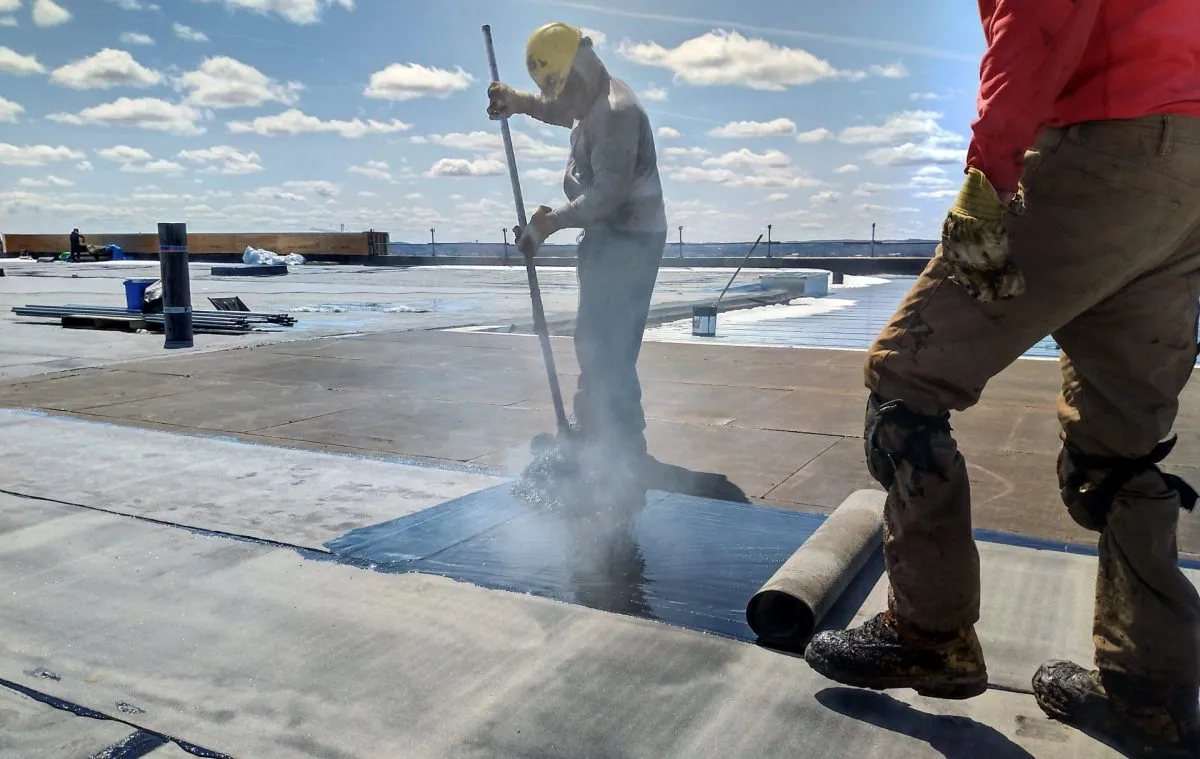
Modified bitumen roofing systems remain common on older Detroit medical campuses because of their proven performance in Michigan's cold-weather climate and their compatibility with the irregular penetration layouts found on legacy hospital buildings. Torch-applied modified bitumen, properly installed with reinforced base sheets and granule-surfaced cap sheets, delivers excellent resistance to the thermal cycling that Detroit winters impose on roofing membranes. However, torch application carries ignition risk that requires special permitting and fire watch protocols at occupied medical facilities—a requirement that many facilities managers enforce beyond the minimum code standard to protect against any fire event in an occupied healthcare setting.
Healthcare facilities managers in the Detroit metro choosing a roofing contractor should prioritize vendors with documented experience at Joint Commission-accredited facilities, ICRA-trained field crews, familiarity with Michigan's healthcare construction regulations, and the project management depth to handle phased scheduling across large, complex campuses. The Detroit metropolitan area's healthcare sector—headlined by Henry Ford, Beaumont, DMC, and their affiliated networks—demands a level of contractor competence that few general commercial roofers possess. The facilities that select based on price alone frequently discover the true cost of that decision when infection control breaches or premature system failures require remediation on an occupied medical campus.
Roof-area photos, access notes, leak points, rooftop equipment conditions, and visible membrane details.
Drainage, seams, curbs, penetrations, edge metal, winter exposure, repair limits, and replacement triggers.
A practical split between emergency work, repair, maintenance, coating, recover, and replacement planning.