Manufacturing Facility Roofing in Detroit, MI
Commercial roofing for manufacturing plants, production facilities, and industrial buildings.
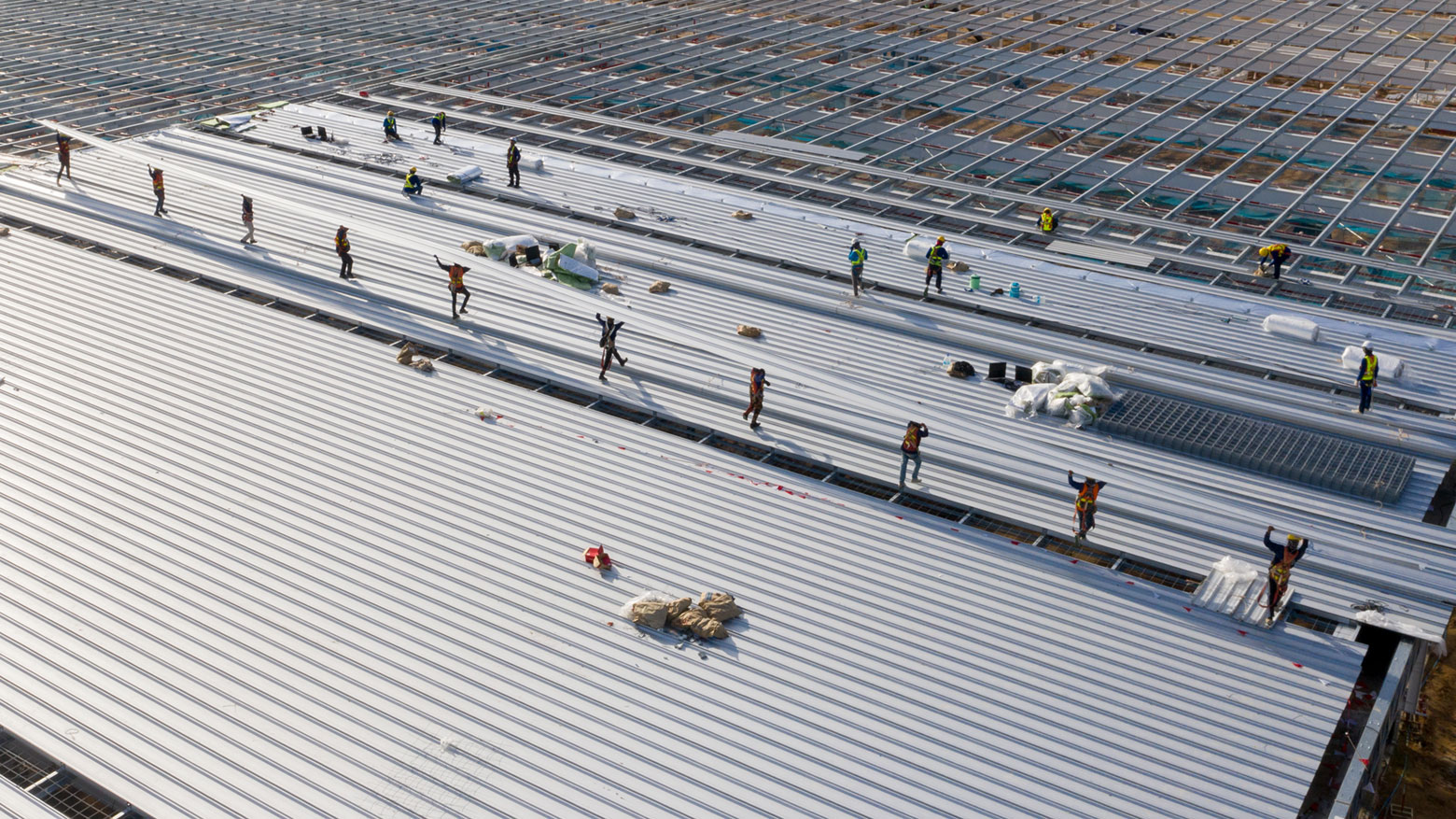
No American city carries a heavier manufacturing legacy than Detroit, and nowhere is that legacy more visible — and more challenging from a commercial roofing perspective — than at the legacy auto plants that still anchor the metro's industrial base. The Ford River Rouge Complex in Dearborn, one of the most famous manufacturing facilities in the world, represents the extreme end of legacy auto plant roofing: millions of square feet of aging roof systems on structures built in multiple eras, carrying decades of accumulated equipment penetrations, vibration damage, and deferred maintenance. Stellantis's Jefferson North Assembly Plant, GM's Detroit-Hamtramck (now Factory Zero) electric vehicle facility, and dozens of tier-one supplier plants across the metro present the same fundamental challenges in varying degrees of complexity.
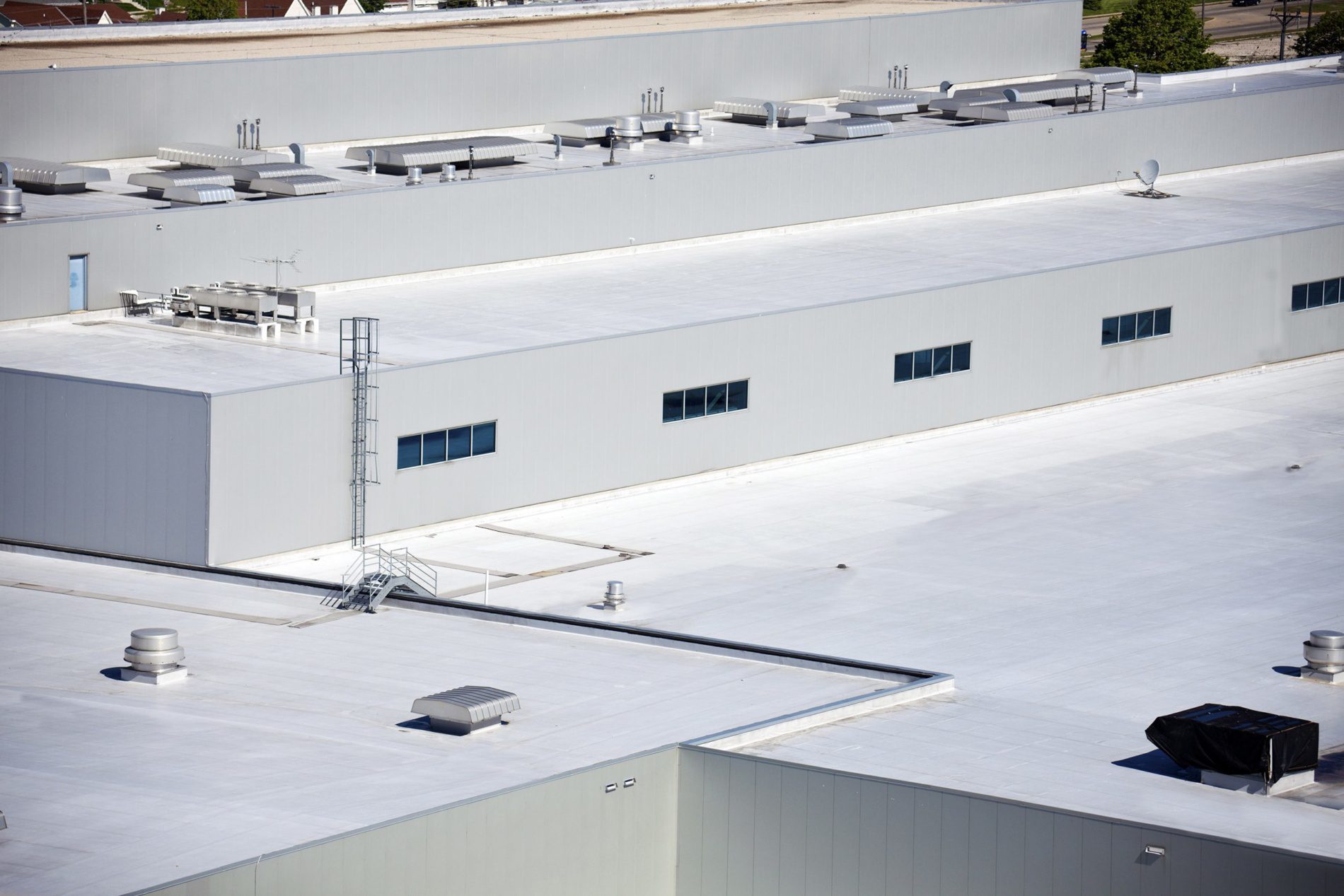
Legacy auto plants in Detroit are defined by their roof-mounted process equipment density. Paint booth exhaust stacks, body shop ventilation systems, conveyor tunnel roof penetrations, and utility distribution runs crossing roof surfaces create an environment where the roofing contractor is managing not just waterproofing but the structural and chemical interface between the building envelope and the production process. We conduct a full penetration inventory before any re-roofing project on a legacy auto plant, documenting every penetration, its condition, its chemical exposure profile, and its relationship to the production process it serves.
Chemical and fume exposure on Detroit auto plant roofs is intense and varied. Paint booth exhausts carry solvent vapors and isocyanate compounds from urethane basecoat and clearcoat application; body shop ventilation exhausts metalworking fluids and weld fumes; stamping plants exhaust press lubricants. Each exhaust type attacks conventional roofing membranes differently. We specify membrane systems by zone, using PVC or reinforced TPO in paint booth and chemical exhaust zones and standard commercial membranes in administrative and utility areas.
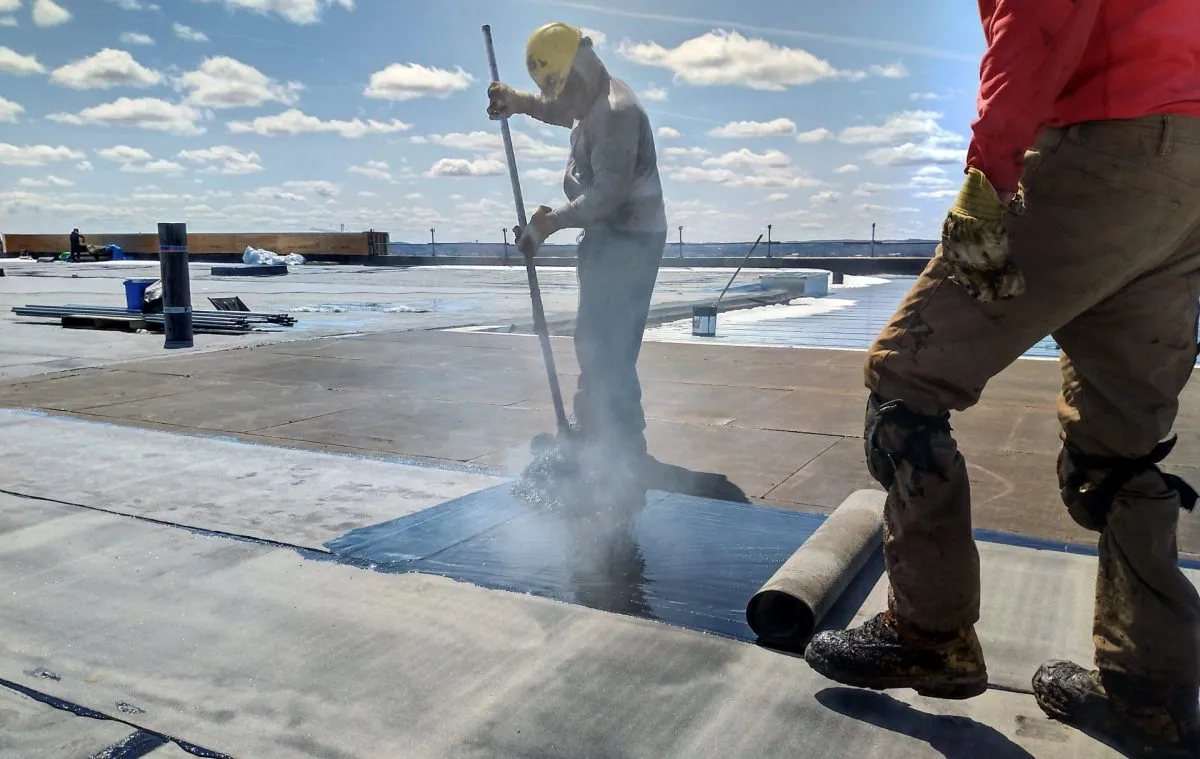
Vibration on Detroit auto assembly roofs is severe and constant. Stamping presses operating at tens of strokes per minute transmit vibration through the building to every roof component. Welding robots, conveyor systems, and assembly tooling all contribute to a continuous vibration environment that fatigues roofing seams faster than in any other commercial building type. Our vibration-resistant flashing systems use reinforced stripping plies, flexible curb caps, and additional reinforcing at all equipment bases — and we recommend quarterly seam inspections in the highest-vibration zones.
Skylights over production floors in Detroit's legacy auto plants range from original industrial monitors dating to the plant's construction to mid-century polycarbonate replacements to modern structured aluminum units. The oldest units are often the most critical to address — failed original skylights can drop deteriorated glazing onto production floors, and their curb conditions are rarely documented in maintenance records. We survey all skylight conditions during the assessment phase and prioritize replacements by risk level.
Drain contamination on Detroit auto plant roofs is a significant environmental compliance concern. Stormwater runoff from roofs with paint booth exhaust or metalworking fluid discharge can carry regulated compounds subject to NPDES permit requirements and Michigan DEQ oversight. We coordinate drain retrofit work with your environmental compliance team and provide documentation supporting your stormwater permit.
Production schedule coordination at Detroit auto plants operates under the relentless pressure of vehicle production quotas and model changeover timelines. Roofing work must be planned months in advance, phased to work zones that do not overlap active assembly areas, and executed with crews who understand the safety protocols — lockout/tagout, fall protection, hot-work permits — that govern every minute of overhead work in a running auto plant.
Heavy load bearing is a critical specification issue on Detroit's oldest auto plant roofs. Many original roof structures were designed to 1920s-1940s building codes with live load allowances well below modern standards. When re-roofing projects involve added insulation thickness, ballast replacement, or new equipment curb installation, structural review is mandatory. We engage structural engineers with auto plant experience before finalizing any specification that adds dead load to a legacy auto plant roof structure.
Detroit's auto plant roofing challenges are unlike anything in the commercial roofing mainstream — and they require a contractor with the industrial experience, chemical expertise, and scheduling discipline to match. Our team has managed legacy auto plant roofing scopes from the first penetration inventory through final flood test, and we understand what it takes to keep production moving while protecting these iconic facilities.
Roof-area photos, access notes, leak points, rooftop equipment conditions, and visible membrane details.
Drainage, seams, curbs, penetrations, edge metal, winter exposure, repair limits, and replacement triggers.
A practical split between emergency work, repair, maintenance, coating, recover, and replacement planning.