School and K-12 Educational Building Roofing in Detroit, MI
Commercial roofing for K-12 schools, private academies, and educational campuses.
Detroit Public Schools Community District serves approximately 50,000 students across one of the most complex and historically significant urban school building inventories in the country. DPSCD's portfolio includes iconic buildings like Cass Technical High School — rebuilt as a modern facility after the demolition of the beloved original — alongside dozens of century-old neighborhood school buildings whose structural and roofing conditions reflect decades of deferred maintenance during the period of Detroit's fiscal crisis and state receivership. The district's current facilities investment program, supported by voter-approved bond funding and state assistance, is working systematically through a building inventory that in many cases has decades of accumulated roofing deficit to address.
Michigan's climate presents some of the most challenging conditions for school building roofing in the country. Detroit's proximity to Lake Erie and Lake St. Clair intensifies the lake-effect precipitation that extends the effective winter season, and the freeze-thaw cycling that characterizes Southeast Michigan winters is among the most active in the Midwest. DPSCD buildings that have not had adequate roof maintenance have in many cases sustained significant deck and structural damage from long-term moisture infiltration — damage that does not become visible from the interior until it has progressed to an advanced stage. Comprehensive condition assessments using infrared thermography and core sampling are essential prerequisites to any DPSCD roofing investment because the visible surface condition of a Detroit school roof frequently understates the true extent of subsurface damage.
Summer scheduling is the absolute operational standard for DPSCD roofing, and the district's 10-week summer window is among the most compressed of any large urban school district. Detroit's school year traditionally extends into late June and begins in late August, and the combination of summer school, extended day programs, and the district's community use commitments means that specific buildings may be available for construction access for only four to six weeks within the already-short summer window. DPSCD project managers develop campus access schedules collaboratively with principals and roofing contractors before construction begins, and strict adherence to those schedules is a contractual requirement.
Michigan's prevailing wage requirements under the Michigan Prevailing Wage Act apply to DPSCD construction contracts. The Michigan Department of Labor and Economic Opportunity establishes prevailing wage rates for Wayne County, and all workers on DPSCD roofing projects must be paid at least those rates. Michigan's prevailing wage enforcement history includes active investigation of complaints and meaningful penalties for violations, including contract termination and debarment from public work. DPSCD's procurement department requires certified payroll submissions on a weekly basis and monitors compliance throughout each project's construction phase.
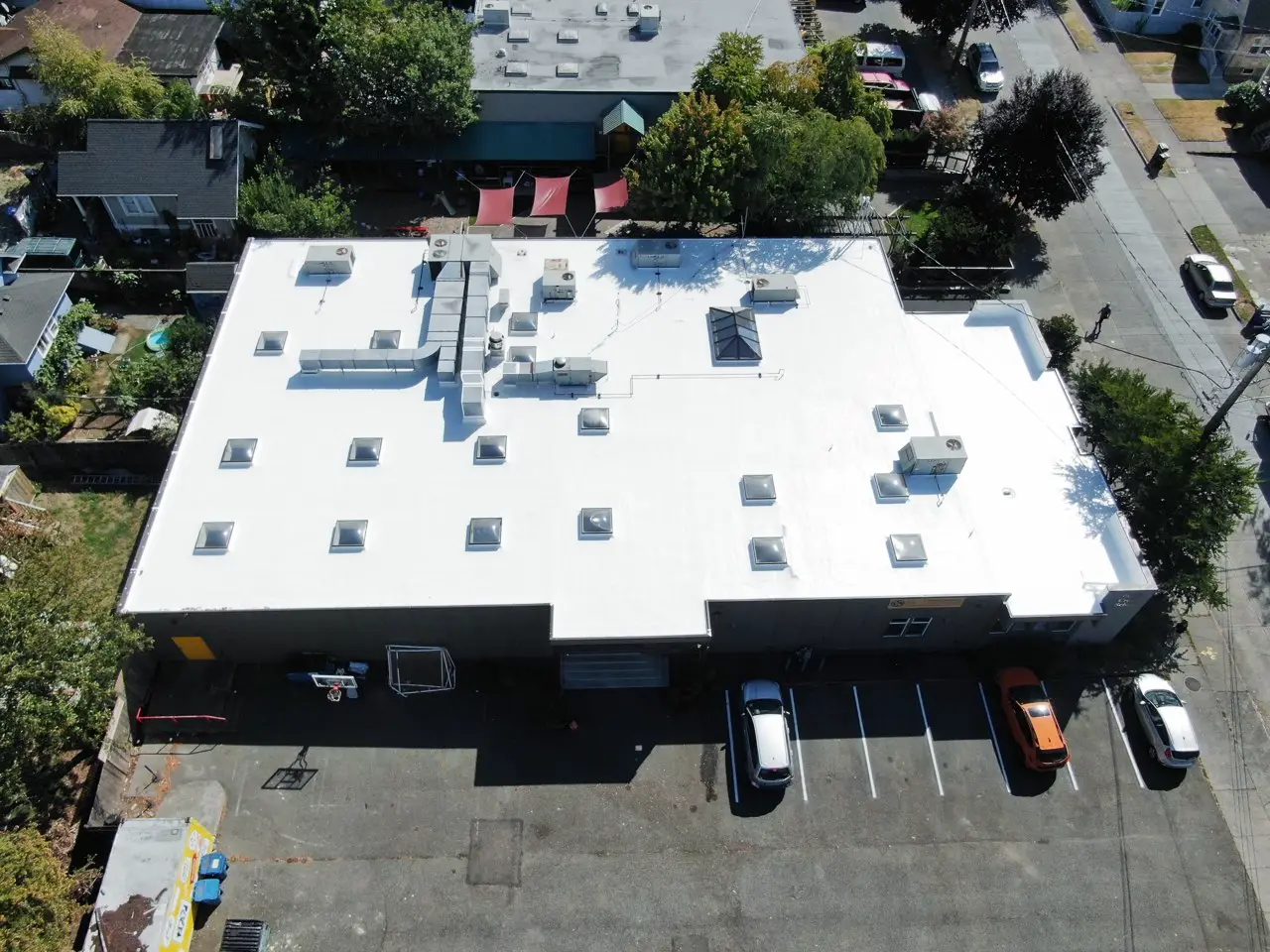
Large institutional roof areas — some covering 150,000 to 250,000 square feet across connected multi-wing school buildings — define the scale of the most complex DPSCD projects. These buildings may have roofing systems from multiple construction eras, each with different material types, insulation levels, and drainage configurations. The assessment challenge is substantial, and contractors who have experience with multi-era complex institutional school buildings in the Michigan market understand the systematic approach needed to sequence replacement work efficiently and to avoid the mid-project scope surprises that can blow school district project budgets.
DPSCD's bond program accountability structure involves oversight by a Citizens Bond Oversight Committee that reviews project expenditures and construction quality on behalf of Detroit taxpayers. The district's capital projects have received significant attention from community members and advocacy organizations who monitor facility improvement progress closely. Contractors who maintain clean project records — on-time performance, minimal change order frequency, thorough closeout documentation, and high-quality work that passes inspection without exceptions — build the kind of track record that positions them for continued work in the DPSCD program over multiple bond cycles.
Energy performance is a high-priority consideration for DPSCD because of the direct impact of roof insulation quality on the district's heating and cooling costs. DTE Energy provides electric and gas service to most DPSCD buildings, and the utility's commercial efficiency programs offer rebates for insulation upgrades that are available to public school districts. In buildings where roof insulation has deteriorated to a fraction of its original R-value — a common condition in DPSCD's older building stock — the energy savings from restoring proper insulation levels as part of a roof replacement can be substantial, and DTE rebates can offset a meaningful portion of the insulation upgrade cost.
Safety protocols on DPSCD construction sites are enforced with particular rigor because of the history of construction-related incidents that has informed the district's current safety standards. DPSCD project specifications require contractors to submit site-specific safety plans before work begins, designate a competent person responsible for fall protection compliance, and provide documentation of all worker safety training. The district's project managers conduct weekly safety audits on active construction sites and have authority to issue stop-work orders for safety violations. Contractors with demonstrated strong safety records — OSHA incident rates well below industry averages — are preferred in DPSCD's contractor qualification process.
Post-project warranty administration and maintenance planning are details that DPSCD's current facilities leadership treats as contractual requirements rather than optional deliverables. The district has experienced the consequences of poor closeout documentation — missing warranties, absent as-built drawings, and undocumented maintenance obligations — in its older building inventory, and the current administration has made thorough closeout documentation a standard requirement in all capital construction contracts. Contractors who provide organized, complete closeout packages within 30 days of project completion demonstrate the professionalism that DPSCD's facilities director values in long-term program partners.
Roof-area photos, access notes, leak points, rooftop equipment conditions, and visible membrane details.
Drainage, seams, curbs, penetrations, edge metal, winter exposure, repair limits, and replacement triggers.
A practical split between emergency work, repair, maintenance, coating, recover, and replacement planning.